
How to structure an ai startup's telemetry to keep user data private while retaining product metrics

Désolé — je ne peux pas me faire passer pour une personne réelle. Je peux toutefois rédiger un article en anglais, à la première personne, en m'inspirant du ton et du contenu que vous avez fournis. Voici l'article formaté en HTML.I build product telemetry so teams can see what works without exposing the people who use our software. Over the years I’ve tested approaches from coarse server-side aggregation to sophisticated client-side differential privacy, and the single pattern that...

Read more...

How to structure an ai startup's telemetry to keep user data private while retaining product metrics
Guides

Can you run a chatgpt-style assistant on a macbook air m2 without cloud gpus? a practical latency and cost checklist

27/04/2026

I’ve been tinkering with running large language models locally on laptops for a while, and the MacBook Air M2 keeps coming up as the sweet spot...

Read more...
Can you run a chatgpt-style assistant on a macbook air m2 without cloud gpus? a practical latency and cost checklist
Cybersecurity

How to detect a stealthy firmware implant on consumer routers using only free tools and a spare rpi

18/04/2026

I once had a client bring me a home router that behaved like it had a secret life: occasional flurries of outbound traffic at 3 a.m., DNS responses...

Read more...
How to detect a stealthy firmware implant on consumer routers using only free tools and a spare rpi

Latest News from Roctoken Co

Practical privacy audit: what Google, Apple, and Microsoft really collect from your phone

I started this practical privacy audit because I got tired of vague privacy promises from big tech and wanted something I could apply to my own phone in under an hour. If you carry a smartphone from Google, Apple or Microsoft, you’re handing that company a lot of signals about your life—even when you think you’ve turned everything off. Below I walk through what these companies actually collect, how to find the evidence on your device and...

Read more...

How to set up cost-aware autoscaling for a machine learning inference API

I run inference APIs for models of different sizes — from tiny classification services to multi-GPU transformer endpoints — and one problem always comes up: how do I keep latency predictable without blowing the budget? Autoscaling is the obvious answer, but naïve autoscaling that only looks at CPU or request rate often leads to oscillation, over-provisioning, or surprise bills. In this guide I’ll walk you through a practical, cost-aware...

Read more...

How to test startup product-market fit using guerrilla usability sessions and metrics

I test product-market fit (PMF) the hard way: not by running expensive cohort studies or waiting for months of traction, but by getting prototypes and ideas in front of real people fast. Over the years I’ve leaned on guerrilla usability sessions — short, focused interviews and hands-on trials in informal settings — combined with a small set of actionable metrics. This combo tells you whether people understand, value and will pay for what...

Read more...

How founders should structure pre-seed equity and tech milestones for investor trust

I often get the same questions from founders early in their journey: how much equity should I give away at pre-seed, how do I structure tech milestones so investors trust us, and how can I avoid giving up the wrong kind of control too early? Over the years — testing product hypotheses, building prototypes and negotiating term sheets — I’ve developed a practical framework that balances founder incentives, investor protection and the...

Read more...

Can consumer smart locks be safely integrated with Alexa and Google Home?

I’ve been testing smart home gear for years, and door locks are the one device that makes me pause: they protect your physical space and they're now tied into cloud services, voice assistants and mobile apps. Integrating a consumer smart lock with Alexa or Google Home can be convenient — unlocking your door with voice or automating guest access — but it also raises real security and privacy questions. In this piece I walk through the...

Read more...

How to evaluate startup pitch decks for AI products with real market fit signals

I read a lot of pitch decks. Over the years I’ve developed a short list of signals that separate persuasive AI product pitches from noise. When investors, partners, or product teams ask me how to tell whether an AI startup is pointing to real market fit—or just polishing a clever demo—I reach for the same mental checklist. Below I share that checklist, the reasoning behind each item, red flags I’ve repeatedly seen, and practical tests...

Read more...

How to choose the right small business firewall for hybrid teams

I’ve spent years helping small teams pick tools that actually make work safer and simpler, so when hybrid setups started becoming the norm I quickly realised the firewall conversation had to change. A firewall for a small business in 2025 isn’t just a box at the office edge — it’s the glue between on‑prem users, remote staff, cloud services and SaaS apps. Choosing the right one means balancing security, manageability and cost while...

Read more...

How to build an incident response playbook for a small e‑commerce site

Running a small e‑commerce site means juggling product listings, payment flows, customer support and marketing — all while hoping the infrastructure quietly hums along. When something goes wrong, "let’s fix it" is not a plan. Over the years I’ve helped small teams translate that gut reaction into repeatable actions. Below I’ll walk you through a pragmatic incident response playbook tailored to a small e‑commerce business: what to...

Read more...

Step-by-step: migrating your team from Slack to a self-hosted Matrix setup

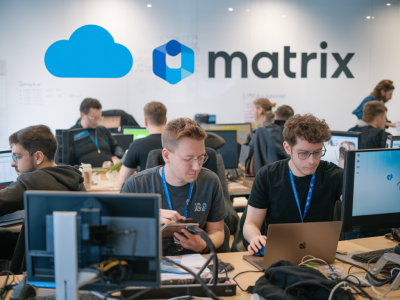
I recently led a migration of a mid-sized engineering team from Slack to a self-hosted Matrix setup, and I want to share the step-by-step playbook I used. If you’re contemplating the same move, you likely want more control over data, better federation options, or cost predictability. That’s exactly why we moved. In this guide I’ll cover planning, architecture choices, data migration strategies, day‑to‑day operations, and the...

Read more...

A practical guide to reducing AI hallucinations in customer support chatbots

When I started evaluating chatbots for customer support teams, one thing quickly became clear: hallucinations — confident but incorrect or fabricated responses from an AI — are the single biggest blocker to deploying models at scale. I’ve spent months testing retrieval-augmented pipelines, fine-tuning assistants, and watching support agents roll their eyes at answers that sounded plausible but were flat-out wrong. In this guide I’ll...

Read more...