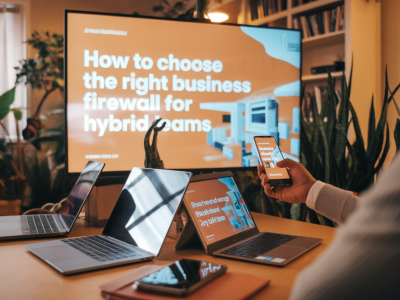


How to vet third-party SDKs before integrating them into consumer apps

I remember the first time I shipped an app that pulled in a third‑party SDK. It promised analytics, crash reporting and a couple of slick UI widgets — all in one package. The integration was painless and the demo looked great. A week later we started seeing unexpected traffic spikes, unexplained permissions prompts, and a client worried about leaked PII. That experience taught me to treat SDKs like components of my attack surface, not just convenient shortcuts.Why vetting SDKs...

Read more...

How to vet third-party SDKs before integrating them into consumer apps
Guides

Choosing between Redis, PostgreSQL, and RocksDB for real-time analytics pipelines

02/12/2025

I build and analyze data systems for a living, and one of the recurring questions I get from engineering teams and startups is: “Which storage...

Read more...
Choosing between Redis, PostgreSQL, and RocksDB for real-time analytics pipelines
Cybersecurity

How to detect stealthy IoT devices on your home network using free tools

02/12/2025

Quiet devices are the worst kind: they blend into your home network like wallflowers until something goes wrong. Over the last few years I’ve spent...

Read more...
How to detect stealthy IoT devices on your home network using free tools

Latest News from Roctoken Co

Why your firmware updates fail and how to make device upgrades reliable in the field

I’ve spent years testing devices, pushing firmware images over flaky networks, and waking up to devices bricked by a half-applied update. Firmware updates are where the rubber meets the road for security, reliability and user trust — and they’re also where product teams make mistakes that turn manageable risks into expensive field failures. In this piece I’ll walk through why firmware updates fail in the real world and share concrete...


Read more...

A hands-on guide to securing open Wi‑Fi in coworking spaces without breaking usability

I spend a lot of time working from coffee shops, libraries and coworking spaces, and one question keeps coming up from readers, founders and friends: how do you secure devices and data on an open Wi‑Fi network without turning every connection into a fortress that destroys usability? In this hands‑on guide I walk through the practical steps I use to protect myself and my team in shared spaces. No theoretical laundry list — just workable...

Read more...

Comparing on‑device speech recognition engines for offline dictation workflows

When I moved several long-form writing workflows entirely offline, the single biggest friction point was reliable, accurate dictation that respected privacy and worked without an internet connection. Cloud ASR (automatic speech recognition) is great for accuracy, but for sensitive notes, interviews, or fieldwork where connectivity is spotty, on-device speech recognition is the only realistic option. I spent months evaluating and integrating...

Read more...

Practical privacy audit: what Google, Apple, and Microsoft really collect from your phone

I started this practical privacy audit because I got tired of vague privacy promises from big tech and wanted something I could apply to my own phone in under an hour. If you carry a smartphone from Google, Apple or Microsoft, you’re handing that company a lot of signals about your life—even when you think you’ve turned everything off. Below I walk through what these companies actually collect, how to find the evidence on your device and...

Read more...

How to set up cost-aware autoscaling for a machine learning inference API

I run inference APIs for models of different sizes — from tiny classification services to multi-GPU transformer endpoints — and one problem always comes up: how do I keep latency predictable without blowing the budget? Autoscaling is the obvious answer, but naïve autoscaling that only looks at CPU or request rate often leads to oscillation, over-provisioning, or surprise bills. In this guide I’ll walk you through a practical, cost-aware...

Read more...

How to test startup product-market fit using guerrilla usability sessions and metrics

I test product-market fit (PMF) the hard way: not by running expensive cohort studies or waiting for months of traction, but by getting prototypes and ideas in front of real people fast. Over the years I’ve leaned on guerrilla usability sessions — short, focused interviews and hands-on trials in informal settings — combined with a small set of actionable metrics. This combo tells you whether people understand, value and will pay for what...

Read more...

How founders should structure pre-seed equity and tech milestones for investor trust

I often get the same questions from founders early in their journey: how much equity should I give away at pre-seed, how do I structure tech milestones so investors trust us, and how can I avoid giving up the wrong kind of control too early? Over the years — testing product hypotheses, building prototypes and negotiating term sheets — I’ve developed a practical framework that balances founder incentives, investor protection and the...

Read more...

Can consumer smart locks be safely integrated with Alexa and Google Home?

I’ve been testing smart home gear for years, and door locks are the one device that makes me pause: they protect your physical space and they're now tied into cloud services, voice assistants and mobile apps. Integrating a consumer smart lock with Alexa or Google Home can be convenient — unlocking your door with voice or automating guest access — but it also raises real security and privacy questions. In this piece I walk through the...

Read more...

How to evaluate startup pitch decks for AI products with real market fit signals

I read a lot of pitch decks. Over the years I’ve developed a short list of signals that separate persuasive AI product pitches from noise. When investors, partners, or product teams ask me how to tell whether an AI startup is pointing to real market fit—or just polishing a clever demo—I reach for the same mental checklist. Below I share that checklist, the reasoning behind each item, red flags I’ve repeatedly seen, and practical tests...

Read more...

How to choose the right small business firewall for hybrid teams

I’ve spent years helping small teams pick tools that actually make work safer and simpler, so when hybrid setups started becoming the norm I quickly realised the firewall conversation had to change. A firewall for a small business in 2025 isn’t just a box at the office edge — it’s the glue between on‑prem users, remote staff, cloud services and SaaS apps. Choosing the right one means balancing security, manageability and cost while...

Read more...